So, You Wanna Write a Best Seller . . .
You can become a best-selling author. It's easy as 1-2-3.
Just:
-
Sit down at the computer or take pen in hand while you wait momentarily for the inspiration to flow;
-
Send the completed manuscript to an agent or publisher; and then
-
Relax and wait for the world to beat a path to the nearest bookstore to buy your book.
It's really very simple. Right?
Wrong! The road to bestsellerdom is littered with the blood, sweat, tears and manuscripts of writers who attempted to make the journey.
|
ISBN: 0345411781 Publisher: Ballantine Pub. Date: June 1998 Click To read a Book Excerpt |
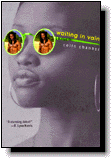
Author Colin Channer has a tale of woe that sounds like a situation comedy. While completing work on his first novel, Channer worked at a variety of freelance editorial jobs. A client accidentally spilled coffee on a laptop that contained his manuscript. A replacement laptop was defective. As the deadline loomed closer, a third laptop broke. He eventually completed work the manuscript for Waiting in Vain in longhand. "I learned the hard way that technology is only a tool," says Channer.
Like Waiting in Vain, many books that grace various best sellers' lists almost didn't get published for a number of reasons. Aspiring authors would do well to heed the advice gleaned from the experiences of those who have made it.
SOMETIMES IT's WHO YOU KNOW . . .
The late Harlem Renaissance author Dorothy West wrote her first novel, The Living is Easy in 1947. After leaving New York for Martha's Vineyard, West wrote short stories for the New York Daily News and a regular column for the Vineyard Gazette. A manuscript for an unfinished novel remained abandoned in her home for decades until the author and her work came to the attention of the late Jacqueline Kennedy Onassis. A working friendship developed between West and Onassis, then an editor with Doubleday. The Wedding, West's second novel, was released in 1995 shortly after Onassis' death. The book is dedicated to her memory.
The Wedding was not the only best-selling work by an African-American author Onassis worked on. Author and artist Barbara Chase-Riboud first envisioned an epic poem about Thomas Jefferson's slave, Sally Hemings and offered it to Toni Morrison, then her editor at Random House.
|
ISBN: 0312247044 A national bestseller with more than 1 million copies sold, Sally Hemings now comes to trade paperback for the first time. Barbara Chase-Ribould tells the touching story of the love affair between Thomas Jefferson and his beautiful quadroon slave. Winner of the Janet Heidinger Kafka Prize for best novel by an American woman. |
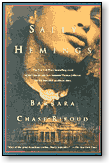
Chase-Riboud was told the work had a better chance as a historical novel. The author scrapped the project until the summer of 1977 when she met Onassis in Skorpios, Greece. During a conversation "about presidents, passion and power," the former first lady encouraged her to write the book about Hemings. Later, when Onassis became an editor at Viking Press, one of the first books she acquired was Barbara Chase-Riboud's novel, Sally Hemings.
At Doubleday, Onassis also acquired Michael Jackson's autobiography, Moonwalker.
. . . AND SOMETIMES, IT ISN'T.
Guy Johnson is the son of author, poet, playwright, director, producer and educator Maya Angelou. But that didn't help him find a publisher for his novel, Standing at the Scratch Line. Agent Manie Barron was an editor at Random House when the book came to his attention.
The novel, which Barron calls "a guy's book," covers more than three decades between 1916 and 1948. He acquired the book because "it is full of rough-and-tumble action. The main characters encounter Germans, bigoted U.S. soldiers, the mob and the Klan."
Barron says Standing in the Scratch Line is "a very long book" and the length may have caused hesitation by some publishers. "I also think others may have bought into the myth that men ’ particularly black men ’ don't read fiction and passed on the project. This is a case where a black male book seen through the perspective of a black male editor may have made the difference because we understand the market, " he adds.
|
The first American bestsellers' lists were published in 1895 by a literary magazine called The Bookman. Publisher's Weekly established its list of best-selling fiction and nonfiction books in 1912. In the years that followed, a plethora of national, regional, local and retail lists were compiled. Currently, there as many bestsellers lists as there are books to be listed. Most authors, their publicists and their mothers publicly maintain that all bestsellers' lists are created equal. Privately their eyes are watching the New York Times Best Sellers List. Although the New York Times Book Review began publication in the late 1890s, the newspaper's first bestseller list appeared on October 6, 1935. The list was published sporadically during World War II and "The Best Selling Books, Here and Elsewhere" resumed regular publication in the New York Times on Sunday, August 9, 1942. At the top of the fiction list was Rachel Fields' And Now Tomorrow and The Last Time I Saw Paris, journalist Elliot Paul's memoir of pre-World War II Paris, was the number one nonfiction book. While both books spent only a week as number one, the list has become "the big dance" within publishing industry. "The appearance of a book on the New York Times bestseller list impacts contract renegotiations and bonuses for authors," says literary agent Denise Stinson, who had three clients in the top five on the list in 1998. "Regional lists don't count. Local lists don't count. When I am negotiating with a publisher, it does me no good to say: ’This author spent ten weeks on the Boston Globe best seller list.’ It's making the New York Times list that counts." Publishers, authors and agents are not the only ones who are watching the list. The newspaper's list creates discounts in book stores, with major chains offering double-digit discounts on books on the list. The discounts and prominent placement in store displays tend to increase sales. "It's about money. Sales translate into dollars which translate into interest on the part of publishers. That's the simple equation," says Stinson. Mail-order book clubs often consult the list when selecting books to offer their members. As a result, the New York Times bestseller list has become an arbiter of taste says Duke University professor Janice A. Radway, author of A Feeling for Books: The Book-of-the-Month Club, Literary Taste and Middle Class Desire. But a best-selling book is not necessarily a good book. "Shock jock" Howard Stern whined that the list must be rigged when Secretary of State Colin Powell's autobiography My American Journey briefly came in ahead of his Miss America on the Times’ nonfiction list one week in 1996. The critics had other opinions about his work. And, Stern's complaint notwithstanding, there have been other controversies surrounding the list. In 1983, author William Peter Blatty sued the New York Times for refusing to list his book, Legion, on its bestseller list. The author, who also wrote The Exorcist, claimed the Times’ failure to include Legion on the list cost him $3 million in sales and movie rights. Blatty's attorneys demanded to know how the Times compiled its list. (The book actually appeared on the list for one week --at the bottom Blatty lost his suit in two California courts and the U.S. Supreme Court refused to hear his appeal.) Various organizations from a business consulting firm to the Gannett Foundation to the Church of Scientology to the Kuwaiti government have been accused of making large bulk purchases of books at scattered retail outlets in order to manipulate sales data and garner a spot on the list. In 1997, the Times angered many of the independent book stores that supply sales figures for the lists by allowing readers of the Internet version of the newspaper to order reviewed books and bestsellers exclusively from its sponsor, Barnes & Noble. As a result, more than fifty independents stopped reporting sales data to the Times used to compile its lists. Agent and publisher Denise Stinson says it's important for readers, writers and publishers to understand how the list is compiled. While specifics are closely guarded, the paper does reveal that the lists reflect sales "at almost 4,000 bookstores plus wholesalers serving 50,000 other retailers (gift shops, department stores, newsstands, supermarkets), statistically weighted to represent all such outlets nationwide." What does that mean? The recording industry's list compiled by Billboard, counts every record bought in every store throughout the country. The New York Times’ methodology tracks volume in only selected stores. Stinson says as a result, "an author can move a lot of books in a particular week, within 100 days or within a six-month period and still not get on the list if the sales were not in stores that the New York Times counts." Throughout its 58-year history, a few African-American authors have made the Times’ list. They include: Alex Haley, Marian Wright Edelman, Walter Mosley, Iyanla Vanzant, Ralph Ellison, Bebe Moore Campbell, James Baldwin, Bill Cosby and E. Lynn Harris. But on June 21, 1992, the shot heard ’round the publishing world was fired when books by three African-American women simultaneously appeared on the New York Times bestseller list. Terry Mc Millan, Waiting to Exhale (6); Toni Morrison, Jazz (9); and Alice Walker, Possessing the Secret of Great Joy (14). Morrison's Playing in the Dark, held a spot on the nonfiction list. Publishers learned that Sunday what Blackboard's Faye Childs and others have known for a very long time: African-Americans read. They buy books. Whites will buy books written by black authors. The discovery by publishers of an untapped market sparked an increase in titles by African-American authors on bookstore shelves, which in turn, created a demand for more books. Industry estimates show a steady increase in book buying by African-American consumers. Discussion groups and book clubs are being established all over the country. No discussion of the New York Times bestsellers list can be complete without mentioning the impact Oprah's book clubs. In nearly a decade the clubs have recommended more than four dozen books. With her massive television audience, Oprah Winfrey has been able to do what others have tried and failed: influence which books can make the New York Times’ bestseller list. |

DON'T BELIEVE THE HYPE
Conventional editorial wisdom is often dispensed by editors and publishers in the form of the ubiquitous rejection letter. The fear of rejection has derailed many writing careers. Most authors have received rejection letters at some point in their careers. Best-selling authors in all genres certainly have their collected their share. Reactions to them range from "just one person's opinion" to constructive criticism to a nuisance to sour grapes. Rejection letters can be recylced in creative ways. Published authors have saved theirs as vindication or to encourage aspiring writers to keep trying.
|
|
Walter Mosely’s Devil in a Blue Dress was rejected by a publisher who wrote "We already have a black detective." Likewise, science fiction writer Octavia Butler received countless rejections for her now-critically acclaimed Kindred.
Think and Grow Rich: A Black Choice Dennis Kimbro's motivational book (with Napoleon Hill) is used in seminars and is required reading in several business courses. However, Kimbro remembers the difficulty he had getting publishers to consider his book. "I received enough rejection slips to wallpaper my room. They did not believe that African Americans would buy business books," says Kimbro.
Bebe Moore Campbell submitted a collection of short stories to Toni Morrison when she was an editor at Random House. "She sent me back a lovely, lovely letter. A rejection letter, but a lovely one," she recalls. Children's book author Eloise Greenfield's book, Grandpa's Face was rejected by several houses before it was published in 1988. The book was well-received by critics and cited for excellence by a number of organizations, including the American Library Association.
ALL EDITORS HAVE TALES ABOUT "THE ONE THAT GOT AWAY"
But publishers are not perfect. In the 1980s, William Phillips, now senior executive editor and vice president of Little, Brown & Company, passed on a two-book deal of works by author Alice Walker. The first book was a collection of short stories. The second book was an unwritten novel that became the Pulitzer Prize winning best seller, The Color Purple. Phillips adds, "In the intervening fifteen years, the list of books I've turned down that became best sellers is as long as my arm . . . My only comfort is that every editor of long standing is burdened with a similar list."
Science fiction magazine editor John W. Campbell refused the rights to serialize author Samuel R. Delaney's novel, Nova, because he did not believe readers would be interested in a story about a black character. Nova went on to become a best seller and Campbell's successor at the magazine kept the rejection letter as a reminder that editors are not infallible.
IF AT FIRST YOU don't SUCCEED, MAYBE YOU SHOULD JUST START OVER.
Chicago Tribune columnist Dawn Turner Trice submitted a manuscript to publishers for consideration and received 36 rejection letters in return. In 1983, Trice took a hiatus from fiction writing. When she was ready to resume work on her book, Trice reevaluated what she had written and decided the book should not be revised, it had to be rewritten. In 1995, she sent the new manuscript to Random House. The publisher released Trice's debut novel, Only Twice I've Wished for Heaven, under its Crown imprint.
JUST DO IT!
What do best-selling authors. Iyanla Vanzant, E. Lynn Harris, Parry Brown, Evelyn Palfrey, Zane and Vickie Stringer have in common? They are among the growing number of authors who self-published their first books and sold hundreds of copies -- before major publishers embraced their work.
The most powerful advice published writers offer to aspiring writers is the same in any genre. It is uttered ’ and often worn on T-shirts -- at writers' gatherings: Finish the damn book.
IF YOU BUILD IT, THEY WILL COME
|
by April Sinclair Sinclair's much-touted story of a teenage girl confronting racial prejudice while growing up on Chicago's South Side during the late 1960s. |
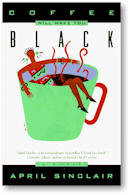
April Sinclair created grassroots support for her unfinished work. Passing out flyers in the San Francisco area, Sinclair included her baby picture and a message that read "Come sit a spell while I read from my funny, touching, provocative novel in progress." A hundred people showed up for the first reading. Soon, she was reading to standing room only crowds in bookstores and coffeehouses. Buoyed by audience reaction to her work, Sinclair kept writing. An agent approached her. It took three days to sell Sinclair's story, which became Coffee Will Make You Black.
NEVER UNDERESTIMATE THE POWER OF OPRAH.
Oprah's Book ClubTM was launched in 1996 to encourage more people to read. Every major book store chain has an "Oprah section" and selection for the list virtually assures best-seller status for a book. African-American authors whose books have been chosen include Maya Angelou, Breena Clarke, Pearl Cleage, Bill Cosby, Edwidge Danticat, Ernest Gaines, Toni Morrison, and Lalita Tademy. The book club went on hiatus in 2002 and re-emerged in June of 2003 as "Traveling with the Classics," a new book club that focuses on "classic literary works" three to five times a year.
LISTS, LISTS, LISTS
For purposes of this article, the term "best seller" is used rather loosely. There are as many bestsellers' lists as there are books to be ranked, but the African-American book-buying public is rarely included in these surveys. In 1991, writer Faye Childs began to compile Blackboard African-American Bestsellers with the help of African-American booksellers. Many African-American authors display the designation on their books and in their promotional materials. However, The New York Times' best sellers' list remains the list.
’GEO’
Related Links
AALBC.com's Best Sellers Page
http://books.aalbc.com/bestsellers.htm
