You might have missed the premiere of The Black List, since
this fascinating new HBO series premiered on August 25th, the
same night Michelle Obama was addressing the Democratic
Convention. Fortunately, you can still catch replays of the
first installment of the groundbreaking program (check local
listings) which features revealing interviews with 23 prominent
African-Americans.
The project is the brainchild of still
photographer/moviemaker Timothy Greenfield-Sanders and former NY
Times film critic Elvis Mitchell who collaborated to produce an
intriguing show far superior to the Black in America special
which aired on CNN earlier this summer. For this documentary
employed a novel format to provoke soul-searching, thereby
eliciting heartfelt answers.
An
unseen and unheard Mitchell posed piercing questions about being
black to his 23 subjects. And the emotional content of their
responses is heightened because each appears onscreen alone,
with nothing behind them but a stark, blank backdrop. This
forces the audience to focus on their words, which have been
invariably edited and distilled down to their most evocative
moments.
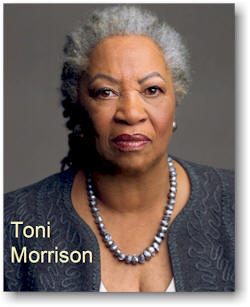
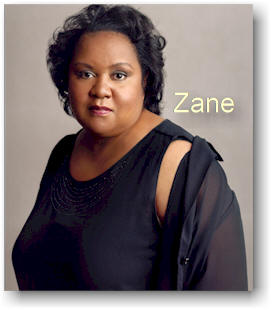
The icons participating represent a diversity of fields ranging
from academia to athletics to activism to the arts. While most
are household names, such as Reverend Al Sharpton, Colin Powell,
Chris Rock and Serena Williams, some are not instantly
recognizable, like Time-Warner CEO Richard Parsons, curator
Thelma Golden and Negro League baseball great Mahlon Duckett.
One person you might be surprised to learn he’s even black is
Slash, the lead guitarist of the heavy metal group Guns N’
Roses. He talks earnestly about how uncomfortable he felt when
lead singer Axl Rose wrote a song with the N-word in the lyrics.
Others’ reflections prove to be just as interesting, whether
it’s Rock ruminating about working at Red Lobster, Colin Powell
declaring that the Armed Forces would never have been integrated
back in the Forties if it had been left to Congress to pass a
law, or Susan Rice talking about being a Rhodes Scholar.
CEO Parsons was particularly insightful, observing that when
you’re black, “people feel compelled to bring up the notion of
ethnicity with you. We’ll know we’ve made real progress when you
just get to be a person.” And if the country ever becomes that
colorblind, shows like this will finally be obsolete.
Meanwhile, a salute to Timothy Greenfield-Sanders and Elvis
Mitchell is in order for producing an innovative series likely
to revamp the way in which television studios approach the
personal portrait genre.
_______________________________________
The Black List, Vol. 1: Russell Simmons (HBO)
In a film that works as a series of
living portraits, prominent African Americans of various
professions, disciplines and backgrounds, offer their own
stories and insights on the struggles, triumph...