|
Rated
TV14 for profanity and adult content.
Film critic Elvis Mitchell and director Timothy Greenfield-Sanders have collaborated on another series of fascinating interviews with a mix of African-American artists, activists, academics and athletes. Many are instantly-recognizable icons who need no introduction, such as Tyler Perry, Laurence Fishburne, Melvin Van Peebles, Bishop T.D. Jakes and Angela Davis. Others are a little less known, like Massachusetts Governor Deval Patrick, comedienne Maya Rudolph, country singer Charlie Pride, gangsta’ rapper RZA, painter Kara Walker, clothes designer Patrick Robinson and Oscar-nominated scriptwriter Suzanne De Passe And then there are those who have met with success away from the limelight, including Episcopal Bishop Barbara C. Harris, community organizer Mahora Carter and Dean of Meharry School of Medicine Dr. Valerie Montgomery-Rice. What all 15 share, nonetheless, is the toll exacted on their psyches and souls by being black in America, something they weigh-in on honestly, each from a unique point of view. Walker talks about how weird it felt to be criticized by a college professor for painting a still life instead of a subject reflecting the black experience. Bishop Jakes observes that ’Our faith has been both a blessing and a curse, because we were taught to hope for heaven while we live in Hell on Earth.’ Van Peebles speaks about cultivating his cornucopia of talents in the absence of any formal training, likening himself to the bumblebee which defies aeronautical explanation and ’flies anyway.’ Maya Rudolph admits to having struggled with her identity, being a mixture of white, black and Jewish, yet looking like none of the above. ’I always felt like an impostor,’ she says of the pressure of her formative years, since it ’cuts very deeply when you're trying to figure out what about you is great.’ Majora Carter reflects on being raised in the slums of the South Bronx, where she grew up depressed about her brother's murdered yet curiously unafraid of her dangerous surroundings.
Although unseen
and unheard, celeb interviewer Elvis Mitchell must be again
commended for eliciting such an array of frank and novel
insights from this impressive assemblage of prominent
African-American luminaries.
Watch an excerpt from The Black List, Volume 2:
Related Links
The Black List,
Volume 1 - HBO Documentary Profiles Prominent African-Americans
|
 The Black List,
Volume 2
The Black List,
Volume 2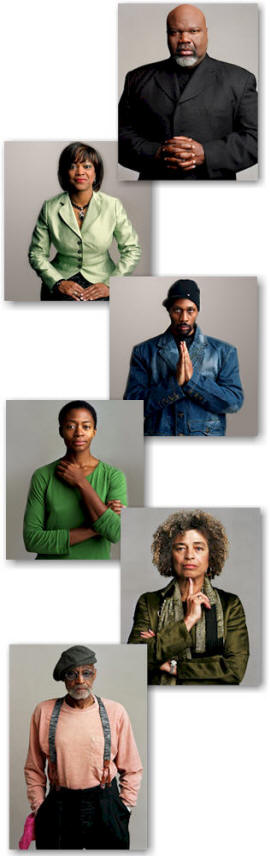 HBO
Review by
HBO
Review by
